
by Jiao hanfei 1002578682, Mou lunwenqiu 1002579127
Linzixuan 1002477241, ZhangYuewei1002475151, LiuQiyue1002579078
“Real love is the best support to keep an old craft alive”
At a colourful street stall in Kuala Lumpur, a henna artist leans close to a customer’s hand. Around her are design albums, cones of henna paste, sample cards and bright night-market lights. The work looks decorative at first, but each line requires patience, control and memory. For this artisan, henna is not only a service. It is a living folk craft that continues through everyday customers.
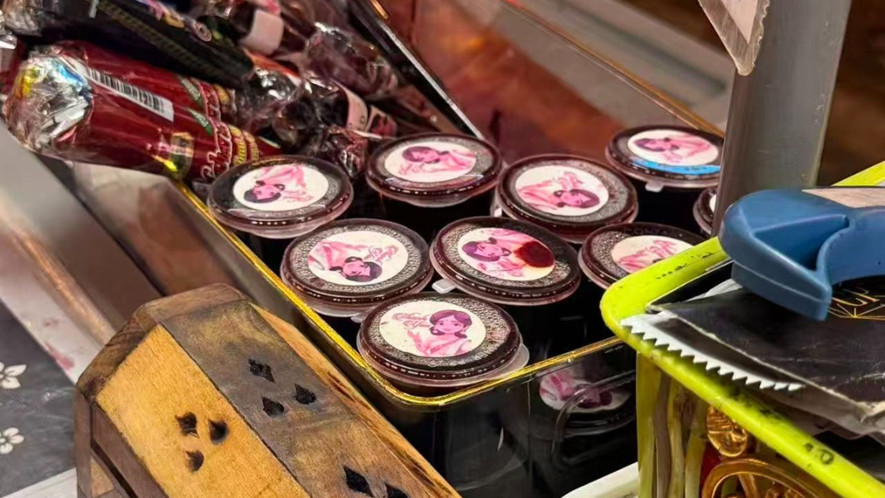
Henna cones, small tools and sample materials create a practical worktable for the artist.
The artist has more than six years of experience in henna creation. Before opening this stall, she ran a small nail and foot beauty business without a permanent street-front shop. The pandemic forced that business to close, but she returned after the crisis with a clearer direction: henna hand-painting as the centre of her craft, supported by beauty services to keep the business alive.
Henna has long been connected with Indian cultural traditions, especially weddings and festivals. In Malaysia, however, the craft has crossed community boundaries. Malay customers also visit during major celebrations such as Hari Raya Aidilfitri. The artist explained that many locals still enjoy henna because it carries blessing, beauty and a temporary sense of ceremony.
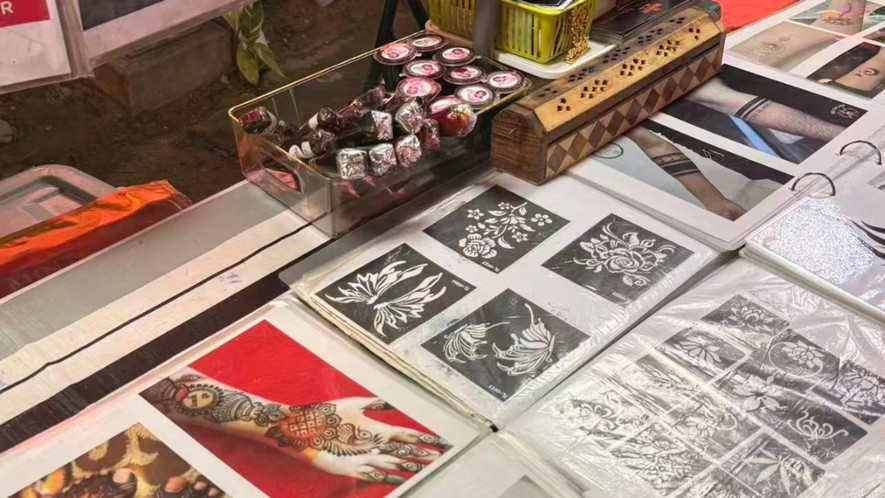
Design albums allow customers to browse patterns before the artist creates a personal version.
What makes her work personal is originality. She does not simply copy ready-made templates. Instead, she studies flowers, butterflies, lines, curves and customer preferences, then turns them into hand-drawn patterns. “If you truly love henna, you can create all kinds of original patterns,” she said. “Keep practising every day, and the income you earn from this skill will far exceed your expectations.”
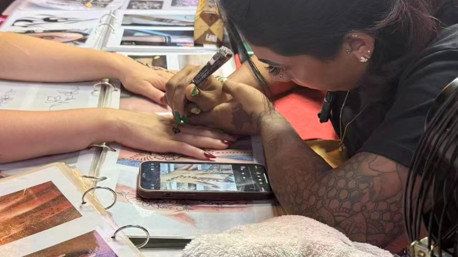
The close hand-painting process highlights patience, skill and trust.
Her stall also shows how traditional craft adapts to digital life. QR codes, online examples and phone references help customers choose quickly, while social media makes the patterns shareable. Still, the core of the craft remains human: a steady hand, close conversation and trust between artist and customer.
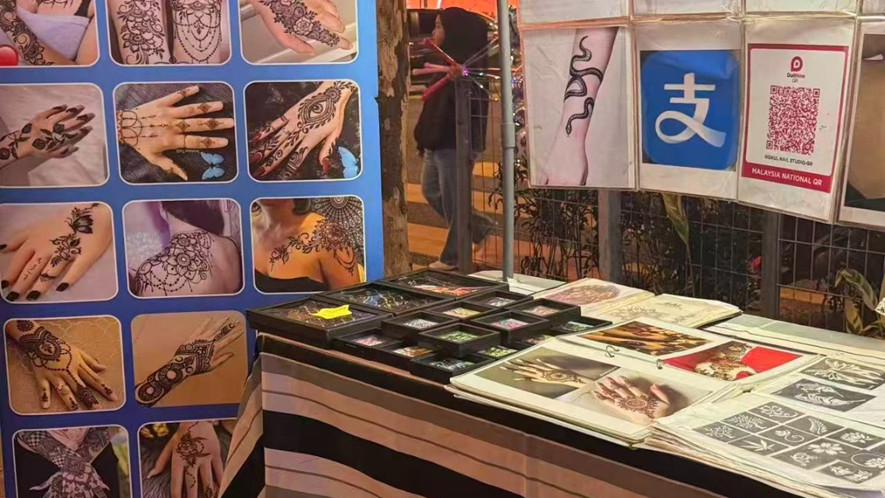
QR codes and photo references show how traditional henna adapts to digital customer habits.
Today, this small stall protects heritage not through a museum display, but through daily practice. Stroke by stroke, the artist keeps henna visible in city life and reminds younger audiences that old crafts survive when they remain useful, personal and meaningful.
Leave a Reply